
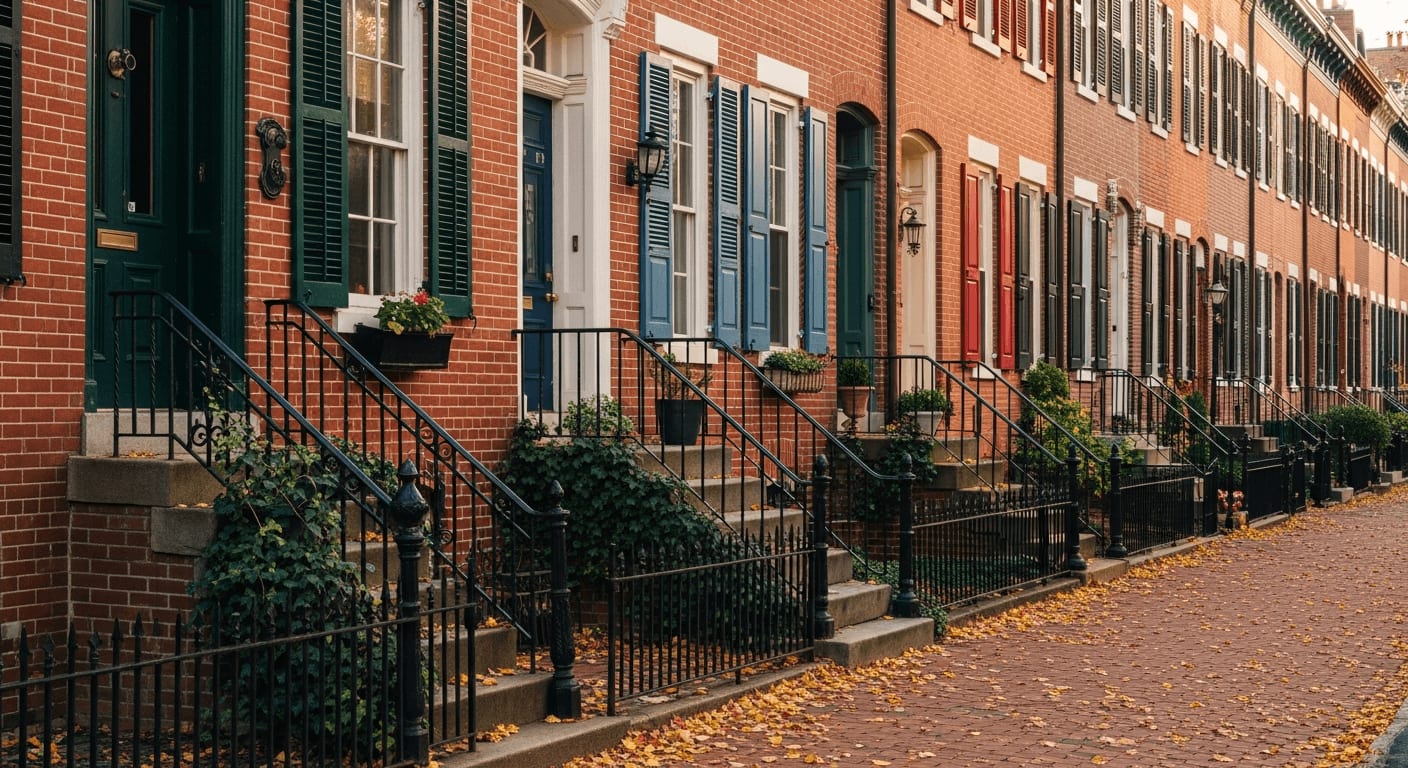
Capitol Hill is one of the largest historic districts in the country, and one of the more distinctive rowhouse markets in DC. Buyers shopping the Hill for the first time often arrive with the wrong mental model — treating the rowhouses as interchangeable when they really aren’t.
Here are the working notes I share with a first-time Hill buyer.
The historic district matters
A meaningful share of the Capitol Hill market sits within the historic district, which means exterior modifications go through HPRB review. That includes windows, doors, fences, paint colors in many cases, additions, and rear porches. A renovation that’s straightforward in Brookland can take six additional months on the Hill.
Before you write, confirm what’s allowed and what isn’t for the specific property. Some sellers will have approved historic plans in hand — ask.
Federal vs. Victorian: more than aesthetics
The two dominant rowhouse types on the Hill — federal-period (typically 12–18 feet wide) and Victorian-era (typically 18–25 feet wide with bay fronts) — trade at different price-per-square-foot bands. The federals are tighter on layout, harder to renovate to modern open-plan expectations, and often have shorter ceilings on upper floors. The Victorians offer more flexibility but command a premium.
Neither is “better.” They’re different products with different buyer pools.
Structural quirks are normal
Rowhouses age unevenly. Settling, shared party walls, original joists, knob-and-tube wiring in untouched areas, and old plumbing are all standard. A solid inspection should pay particular attention to the basement (water entry, foundation, ductwork), the roof (most are flat or low-slope), and the rear addition if there is one.
I usually recommend a sewer scope on Hill properties built before 1940 — line conditions vary widely block to block.
Parking is a real factor
Some blocks have dedicated parking, some have alleys with garage potential, and some are entirely street-permit. The parking situation drives more buyer behavior than most newcomers realize, and it shows up in the price.
Renovation budgets run high
A serious renovation on a Capitol Hill rowhouse — kitchen, baths, mechanicals, addition — lands in the $400–700/sf range. That’s before historic-district approval delays. Buyers who plan to renovate should scope the project with a Hill-experienced general contractor before they write, not after they close.
Walk the block at different times
Eastern Market on a Saturday is one experience. The same block on a Tuesday night is another. Buyers who walk the immediate block at multiple times of day before writing tend to make better long-term decisions.
What buyers should expect to pay
The Hill rowhouse market currently bands roughly:
- $900k–1.3M for an untouched federal that needs full systems and cosmetic work
- $1.4–1.8M for a thoughtfully updated rowhouse in good condition
- $1.9–2.5M+ for fully renovated rowhouses with addition, primary suite, and high-end finishes
Carriage houses and corner properties carry their own premium. Subsections (North Hill near H Street vs. classic Eastern Market blocks vs. the Navy Yard side) have meaningfully different comp sets.
How to approach a Hill purchase
Start with the neighborhood section, not the address. Confirm what condition and renovation profile match your budget. Build the comp set against that profile. Then watch the market for four to eight weeks before writing — the right home for you appears, and you’ll know it.
If you’re considering a Capitol Hill purchase, I can walk you through the block-by-block trade-offs and put a focused comp set together for your target area.